|
|
|
|
|
| |
|
|
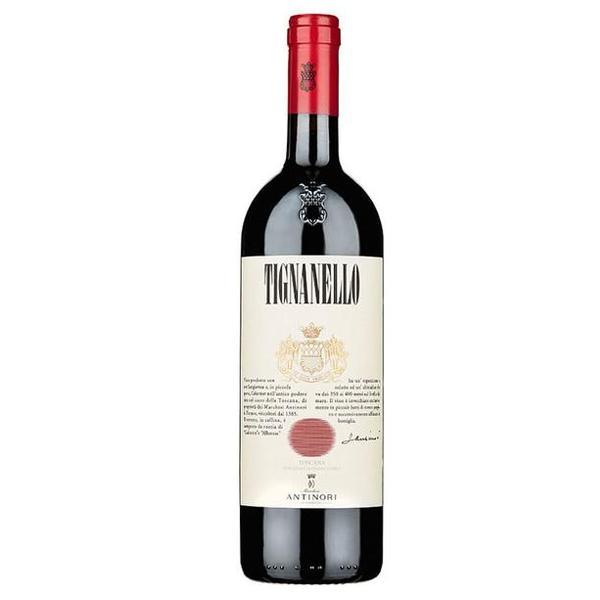
TIGNANELLO |
|
|
|
 |
(0) Review |  Write a Review Write a Review |
|
|
|
 Red Red
 Italian Italian
 Tuscany
 Sangiovese Sangiovese |
|
|
|
|
|
|
|
Tignanello is produced exclusively from the vineyard of the same name, a parcel of some 140 acres (57 hectares) with limestone-rich soils and a southwestern exposure at 1150-1325 feets (350-400 meters) above sea level at the Tignanello estate. It was the first Sangiovese wine to be aged in small oak barrels, the first modern red wine to use such non-traditional varieties as Cabernet in the blend, and among the first red wines from the Chianti Classico area to be produced without white grapes. The wine, originally called Chianti Classico Riserva Vigneto Tignanello (a Chianti Classico Riserva from the Tignanello vineyard), was produced for the first time from a single vineyard parcel in 1970, when the blend contained 20% of Canaiolo and 5% of Trebbiano and Malvasia, both white grapes, and the wine aged in small oak barrels. In 1971 it became a Tuscan red table wine rather than a Chianti Classico, and was called Tignanello. In the 1975 vintage the percentage of white grapes was definitively eliminated from the blend. Ever since 1982, the blend has been the one currently used. Tignanello is bottled only in favorable vintages, and was not produced in 1972, 1973,1974, 1976, 1984, 1992, and 2002.
|
|
|
|
|
|
|
|
Rs. 16225.00
|
Quantity :
750 ML
|
|
|
|
|
|
|
|
|
|
|
|
Tignanello is produced exclusively from the vineyard of the same name, a parcel of some 140 acres (57 hectares) with limestone-rich soils and a southwestern exposure at 1150-1325 feets (350-400 meters) above sea level at the Tignanello estate. It was the first Sangiovese wine to be aged in small oak barrels, the first modern red wine to use such non-traditional varieties as Cabernet in the blend, and among the first red wines from the Chianti Classico area to be produced without white grapes. The wine, originally called Chianti Classico Riserva Vigneto Tignanello (a Chianti Classico Riserva from the Tignanello vineyard), was produced for the first time from a single vineyard parcel in 1970, when the blend contained 20% of Canaiolo and 5% of Trebbiano and Malvasia, both white grapes, and the wine aged in small oak barrels. In 1971 it became a Tuscan red table wine rather than a Chianti Classico, and was called Tignanello. In the 1975 vintage the percentage of white grapes was definitively eliminated from the blend. Ever since 1982, the blend has been the one currently used. Tignanello is bottled only in favorable vintages, and was not produced in 1972, 1973,1974, 1976, 1984, 1992, and 2002.
|
| Vintage:
2018
|
| Alcohol Level:
14.5
|
| Serving Temperature:
18 - 20
|
| Closure:
Cork
|
|
|
Tignanello 2018 is a deeply intense ruby red color. On the nose, it’s remarkably complex with notes of ripe red fruit, black cherries, sour cherries that merge with sweet hints of vanilla, mint and delicate sensations of white pepper and myrtle. Its palate is rich and well-balanced: supple velvety tannins are sustained by exceptional freshness that give the wine length, elegance and persistence of flavors.
|
|
Customer Wine Ratings
| NAME |
SIGHT |
SMELL |
TASTE |
BALANCE |
FINISH |
Rate This Wine
POINT VALUE SYSTEM:
SIGHT:
- Cloudy Color - 0
- Good Clear Color - 1
SMELL:
- No Aroma - 0
- Light Aroma - 1 (Need to bring nose all the way into the glass to smell an aroma)
- Medium Aroma - 2 (Aroma is present as the glass is brought up to the nose)
- Strong Aroma - 3(Aroma is strong and flavorful as the nose approaches the glass)
TASTE:
- Fruit Flavor - 0 (Barely present or noticeable)
- Fruit Flavors - 1 (Present and pleasant but not abundant or intense)
- Fruit Flavors - 2 (Abundant and powerful fruit flavors)
BALANCE:(Fruit/acid/tannin)
- Poor Balance - 0
- Good Balance - 1
FINISH:
- Light to none - 0
- 15-30 seconds - 1
- 30 sec to 1 minute - 2
- >1 minute - 3
|
|
PRODUCT REVIEW FOR TIGNANELLO
Sorry! No Review Found...
|
|
|
|
|
|
|
|